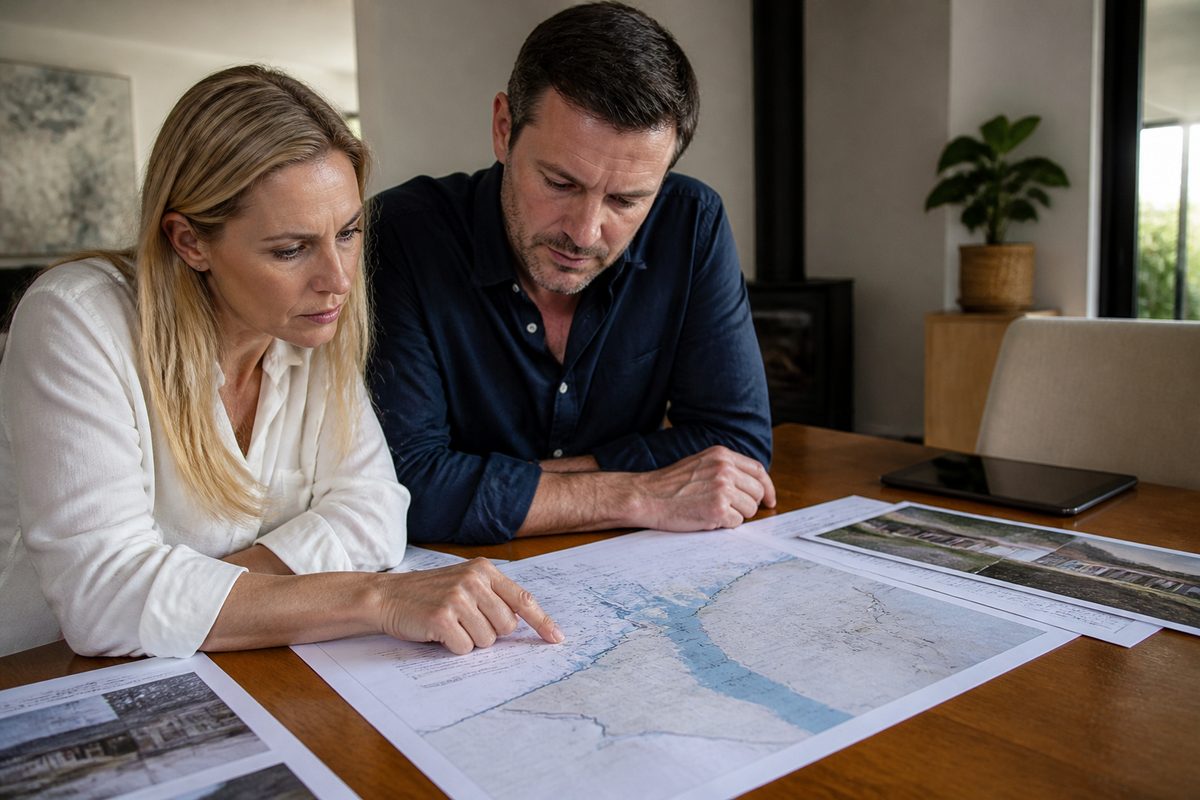
A Helensvale home is worth buying only after you confirm how water, traffic and daily travel affect that exact property. Suburb averages cannot tell you whether a driveway floods, whether road noise reaches a bedroom or whether a station that looks close takes 20 minutes to reach. Good due diligence tests the block at street level before the contract becomes unconditional.
Helensvale, Queensland, contains quiet residential pockets, busy transport corridors, canals, creeks and low points that handle stormwater. Two homes a few streets apart can carry different risks and running costs. Buyers should treat each address as a separate case.
What should you prove before making an offer?
Prove that you understand the land, access routes and services you will use each week. Start with the property address rather than a broad suburb profile. Search the lot on council mapping, read the title documents and visit the street under conditions that reveal its weak points.
A sensible first review covers:
- The mapped flood risk for the lot and nearby roads.
- The path water would take across the block.
- Vehicle access during peak traffic and heavy rain.
- Walking routes to shops, schools and public transport.
- Noise from roads, trains and nearby commercial sites.
- Insurance availability, exclusions and excess amounts.
- Planning controls that may affect future building work.
This is a buying test, not a general test of whether Helensvale is pleasant. A suburb can suit your family while a particular property does not.
What does a flood map actually tell you?
A flood map shows where modelled water may reach under set conditions. It can identify river flooding, creek flooding or overland flow, depending on the layers available. It does not promise that an unshaded lot will stay dry.
Read the map at lot level. Check the house footprint, garage, driveway and street frontage. A home may sit above the mapped area while its only exit route crosses lower ground. That matters if water cuts the road before it reaches the building.
Also inspect the map legend and date. Different layers may use different storm events, depths or likelihoods. A shaded area at the rear boundary may mean something very different from deep water around the floor level. Save a dated copy of each result because mapping and models can change.
Helensvale sits within Gold Coast, Queensland, but it is not an exposed beachfront suburb beside the Pacific Ocean. That does not remove water risk. Local creeks, drainage channels, canals and intense rain can still affect a property well inland.
Why should you check the roads around the lot?
Trace every practical route from the property to higher ground and the main road network. Look for dips, creek crossings, underpasses and streets bordered by drainage reserves. Ask whether one blocked street would trap the property or whether another route remains open.
Visit after steady rain if it is safe. Look for ponding beside kerbs, mud lines on fences and water marks in garages. Fresh gravel washed across a driveway can reveal fast surface flow. Raised belongings inside a garage may deserve a direct question.
Ask the selling agent about known flooding in writing. Then seek records from council and the seller’s disclosure material. A verbal claim such as “the house has never flooded” does not answer whether the yard, garage or access road has flooded.
How can the block reveal risks that mapping misses?
Walk from the highest edge of the lot to the lowest. Water follows slope, paving and retaining walls. A small change in level can send runoff toward a door instead of a drain.
Check whether the house sits above the street or below it. Inspect grated drains, spoon drains, downpipes and discharge points. Downpipes that empty beside the slab can overload the ground during heavy rain. Concrete paths may direct water toward the building if they have settled.
Pay close attention to retaining walls. Water stains, soil loss, leaning posts and patched cracks can point to drainage pressure. On a renovated property, compare floor levels between the original house and enclosed patios or converted garages. A low conversion may be more exposed even when the main floor remains dry.
One useful real-life test is to stand at the garage during rain and watch the first ten minutes of runoff. Buyers often focus on the roof, yet water entering beneath a garage door can damage stored goods and internal walls. This small event may never appear as a major flood claim.
How could flood risk change the real cost of the home?
Insurance can turn an attractive purchase price into a poor deal. Obtain quotes for the exact address before the finance or due diligence period ends. Do not use a quote for another home in the same postcode.
Read the definition of flood in the product disclosure statement. Check the annual premium, flood excess and limits for temporary accommodation. Confirm whether retaining walls, landscaping, pools and contents below the main floor receive full cover.
Ask the insurer which property details shaped the quote. Floor height, building type, claims history and mapped risk may affect the result. If one insurer declines cover, keep the written response and compare other providers. A low premium also needs scrutiny if the excess would be hard to pay after a claim.
Include the premium in your annual ownership budget. Then consider how a future buyer may view the same risk. Even when a home can be insured, a high premium can reduce resale demand or limit what another buyer can borrow comfortably.
Will the access routes work during your real routine?
Test access at the times you expect to travel. A map may show a quick route to a Controlled-access highway, but the slow part may be leaving the estate, turning across traffic or passing a school queue.
Drive from the property toward the Pacific Motorway during a weekday peak. Repeat the trip in the opposite direction. If Hope Island Road forms part of your routine, test the relevant junctions rather than relying on an app’s best estimate from midday.
Check the driveway itself. Reverse onto the street if that is how you would leave each morning. Look at sight lines, the road slope and space for visitors. A steep driveway can scrape a low car, while a narrow shared drive may create conflict over parking and bins.
Emergency access also deserves attention. Confirm that parked cars do not narrow the street so much that a large vehicle would struggle. If the home has one practical entry road, find out whether local flooding, road works or school traffic commonly obstruct it.
Does public transport access hold up on foot?
Helensvale railway station is a major interchange, yet distance on a map does not equal an easy walk. Follow the full path from the front door. Note road crossings, shade, lighting, footpath gaps and the time needed to reach the correct platform.
The Helensvale railway connection can help households travelling toward Brisbane or other parts of the Gold Coast. Service usefulness still depends on your arrival time, transfer wait and trip home after dark. Test one complete journey before you value a property premium based on station access.
The G:link light rail connection expands travel options toward central Gold Coast destinations. Some local material may refer to it as the Link light rail. When comparing homes, calculate the door-to-destination trip rather than the train or Light rail segment alone.
Check the last service you could reasonably use and what happens after a missed connection. A station may serve weekday commuting well while being less convenient for an early shift or late return.
How much road and rail noise reaches the property?
Noise changes by hour, wind direction and room position. Inspect once during a weekday peak and again when the area is otherwise quiet. Stand in the main bedroom with the windows open, then closed. Listen in the yard without talking.
Homes near major roads may receive a steady tyre hum rather than occasional loud events. Rail noise can include braking, warning sounds and station activity. Barriers and nearby buildings may redirect sound, so the nearest home is not always the loudest one.
Ask yourself whether you would need to keep windows shut to sleep or hold a conversation outside. That choice can increase reliance on air conditioning. It can also change how often you use a deck, garden or pool.
Health effects from noise can include disturbed sleep, stress and reduced concentration when exposure is frequent. Sensitive sleepers, shift workers and people who work from home should test the quietest room, not rely on a quick inspection held while doors are closed.
Look for existing noise controls such as acoustic fencing, upgraded glazing and seals around doors. Confirm whether those features are in good repair. Decorative fencing rarely blocks low road noise unless it is solid, tall and free from gaps.
Are the local amenities useful from this address?
Judge amenities by the trips your household will actually make. Westfield Helensvale may cover shopping and many services, but convenience depends on the route from the property, parking conditions and whether you can combine errands.
Write down your frequent destinations. Include the supermarket, medical care, childcare or school and one place used for exercise or recreation. Measure travel from the candidate property during realistic periods. A home can be close in kilometres while sitting on the awkward side of a busy road.
For walking trips, inspect crossings and footpaths. A route that requires several high-speed road crossings may not suit a child or a person with limited mobility. Check whether the return walk involves a steep climb or poor lighting.
Do not assign much value to an amenity you will rarely use. A buyer who works from home may care more about a nearby grocery trip and a quiet park than fast motorway access. A regular commuter may accept a smaller yard to gain a safer route to the station.
Which documents should you check before the contract becomes firm?
Match what you saw on site against formal records. Obtain a title search and review easements, covenants and property boundaries. Drainage or sewer easements can limit where you build a pool, shed or extension.
Ask for approvals covering extensions, enclosed patios, decks, pools and converted garages. An unapproved room can create lending, insurance or resale problems. If a low area beneath the home has been presented as living space, confirm its approved use and floor level.
Review council property information, flood records and available planning layers. Arrange a building and pest inspection with clear instructions to examine drainage, moisture entry, retaining walls and signs of earlier water damage. A standard checklist may not give enough detail unless you state your concerns.
Where a body corporate applies, read meeting minutes, insurance records and planned works. Repeated discussion of stormwater, basement leaks or access repairs can reveal costs that do not appear during a dry inspection.
Have the conveyancer explain any special conditions and deadlines. The investigation period must leave enough time to receive searches, professional reports and an address-specific insurance response. Missing a deadline can remove your practical power to act on the findings.
How should you compare two shortlisted homes?
Use one written sheet for both properties. Give each issue a cost or practical effect. Avoid a vague overall score that lets an attractive kitchen hide a hard access problem.
- Record the flood layers affecting the house, yard and exit roads.
- Add the confirmed annual insurance premium and relevant excess.
- Time the main car and public transport trips.
- Rate bedroom and outdoor noise after separate visits.
- List missing approvals, drainage faults and urgent repairs.
- Note which daily amenities can be reached safely.
- Estimate the cost of fixes you would complete in the first year.
A cheaper property may remain cheaper after this review. It may also lose its advantage once higher insurance, extra driving and drainage work enter the calculation. Price negotiations should use documented costs, not a general claim that the area feels risky.
What should you do before signing?
Save the flood maps, walk the block after rain, test each access route, obtain written Insurance terms and visit during noisy periods. Give the address and your concerns to the conveyancer, building inspector and insurer. Keep their answers with the contract file.
Make your offer conditional on completing an address-level flood, access, noise and insurance check before the contract becomes unconditional.